In light of recent reporting and public statements, this piece needs an explicit acknowledgment: César Chávez’s legacy is now being reevaluated in the wake of serious allegations of sexual abuse and coercive behavior, including allegations involving women and minors, as well as renewed scrutiny of his authoritarian conduct inside the movement. Those revelations do not erase the importance of the farmworker struggle or the strategic power of the boycott as a tool of collective leverage, but they do require a clearer distinction between the enduring lessons of a movement and the failings, abuses, and harms of one of its most famous leaders. This project proceeds in that spirit: not to excuse, sanitize, or mythologize Chávez, but to examine what boycotts can do, how power moves through markets, and why movements must be understood as larger than any single figure.
The morning after César Chávez spoke at Riverside Church in New York in the spring of 1985 about a renewed grape boycott, I interviewed him in midtown, where he was staying at the offices of the Franciscan Friars.
Our meeting was short, his message clear, and the stakes plain. He wasn’t talking about consumer choice; he was talking about leverage, the kind ordinary people can apply when institutions, law, and markets leave workers and others with no practical power.
More than 40 years later, the interview still resonates. The U.S. is awash in boycotts, some disciplined, some performative, some lasting years, others dying in a weekend. The targets have evolved, the media channels have changed, and the reasons people mobilize have quickened. But the core logic Chavez used still explains why some boycotts bite and many don’t. The interview and my interest in people’s movements and group dynamics are the anchors for a long-term project on the topic.
Here are twelve quotes from the interview that are particularly relevant today:
- “That’s our best friend, the consumer.” Chávez defined the boycott as market leverage rather than symbolism. The decisive actor is the buyer who can withhold revenue immediately.
- “The boycott is won, not because it’s a popularity contest.” He’s warning against “awareness” as a success metric. What matters is pressure that changes behavior at the target, not applause.
- “We think between six and seven of the percent of the consumers boycotting… would be enough to win.” This is the playbook for modern campaigns: you don’t need everyone, you need the right slice of consistent purchasers.
- “It has no time frame. It’ll go, it can go on for as long as it takes.” Endurance is a strategy. Targets wait out short boycotts. Chávez frames credibility as staying power.
- “They have no rights under the federal law. They’re excluded from the National Labor Relations Act.” He’s explaining why boycotts aren’t a “preference,” they’re a substitute for denied legal bargaining power - in today’s setting, governing power.
- “What we do is organize the workers and then try to get the growers to recognize… through economic pressure, the strikes and especially the boycotts.” This is a clear definition of boycott-as-bargaining: it’s not the end goal; it’s the forcing function that compels recognition and negotiation.
- “We’re asking the growers… not to interfere in the elections… and to immediately voluntarily ban five of the 27 restricted pesticides…” Concrete demands. Not “be nicer,” but specific operational changes (elections, bargaining conduct, chemicals). That clarity is why some boycotts win.
- “In this time, we’re not even asking for contracts. We’re just asking them for the procedures to be able to implement the concept of the law…” He’s narrowing asks to what’s enforceable and foundational: fair process first, outcomes later. It’s a pragmatic escalation strategy.
- “Agribusiness is the largest industry in California, and it’s about $20 billion now… turns… farms into… factories in the fields…” He’s naming the opponent as an industrial power, not “a few bad growers.” It’s a systems critique that still maps to modern supply and influence chains.
- “To keep the Union from organizing, they use legal and… extra legal maneuvers… intimidate… in some cases, murder.” This grounds the boycott in coercion and risk faced by workers. It’s also why consumer pressure mattered: it could operate where workers could be terrorized. Today’s workers are all those terrorized by wrongful policies.
- “They put the ballot box in his trunk and went to Reno for the weekend. We never found the ballot box after that.” A vivid example of institutional failure at the time, it reinforced his argument that the standard mechanisms (elections, boards) were unreliable, necessitating external pressure. This lands particularly hard in the wake of the DOJ’s seizure of ballots in Fulton County, Georgia.
- “It’s not the college student who won the fight for us. It was the families, the people who buy the grapes…” He’s identifying the real “activation segment”: habitual buyers. Today, that maps to repeat customers, not just viral attention.
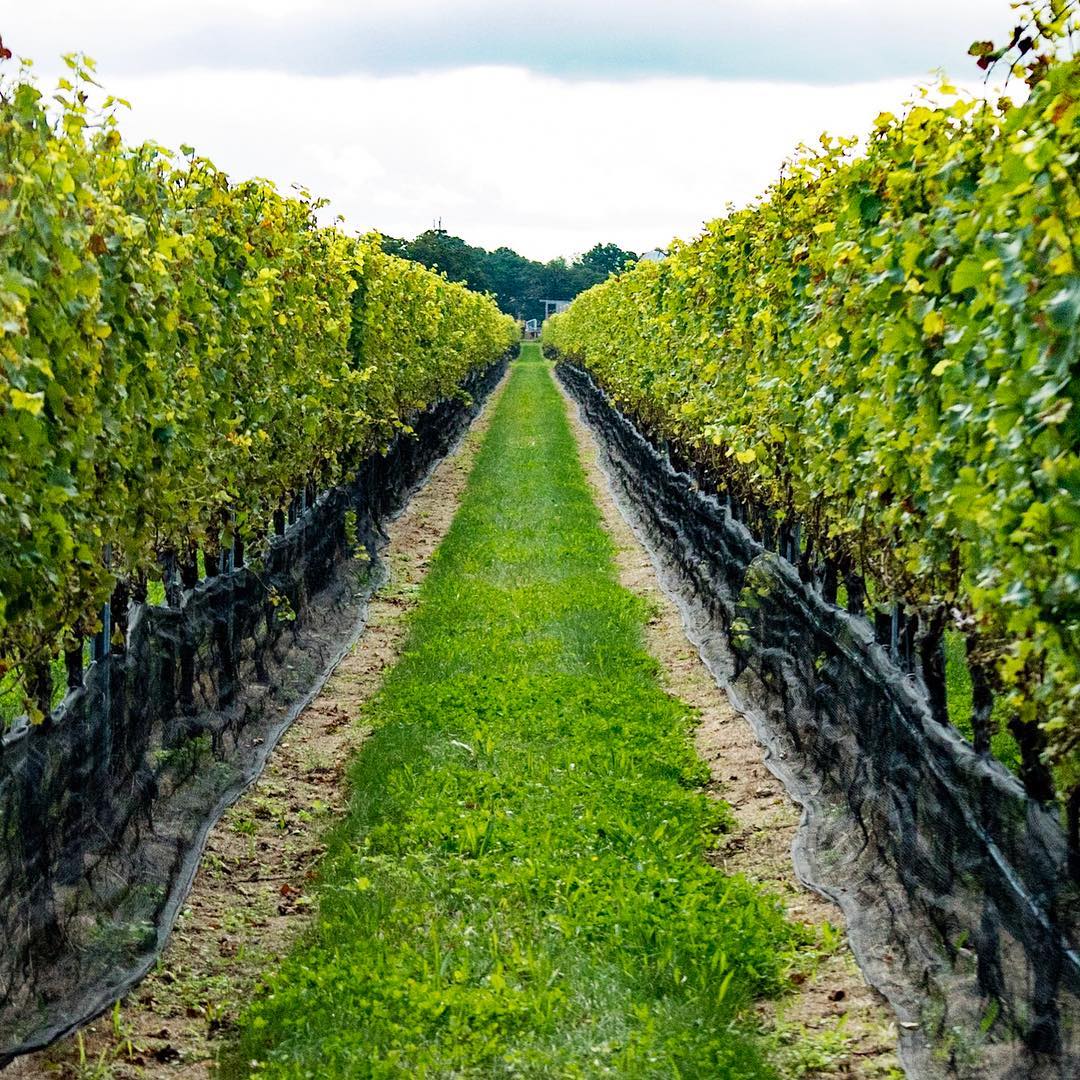
Photo: Straight Lines #1, North Fork